Stream-dwelling frogs in the Western Ghats form groups based on species size
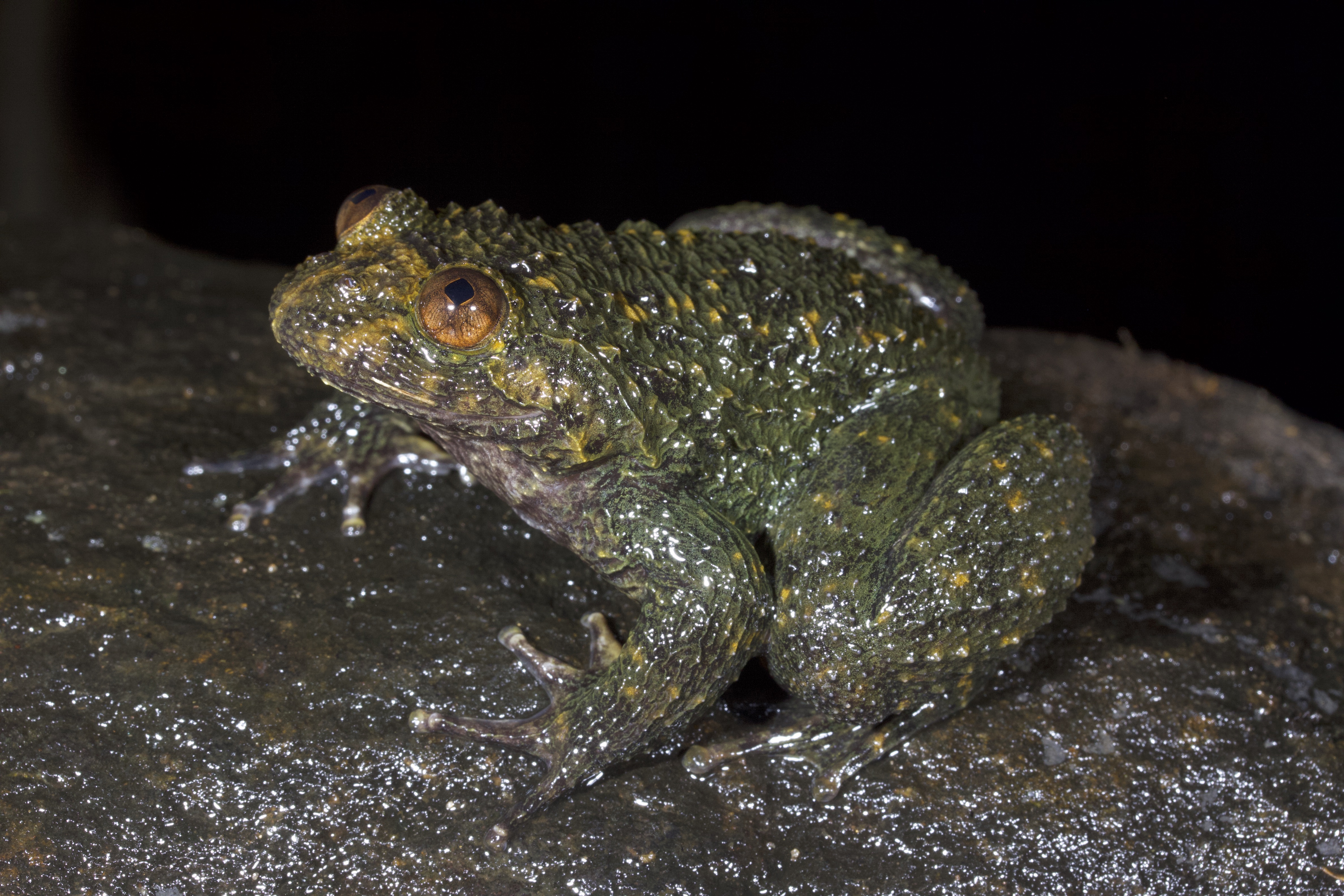
Nyctibatrachus acanthodermis from Nelliampathi, just south of the Palghat Gap (Photo: Saunak Pal)
Researchers at the Centre for Ecological Sciences (CES), IISc, led by Kartik Shanker, have found that stream-dwelling frog species in the Western Ghats tend to co-occur in groups with species of different body sizes, likely to avoid competition.
The Western Ghats is one of the world’s most biodiverse regions, home to a large number of endemic frog species. The study, published in the journal Evolution, examined three genera of aquatic frogs across the mountain range. During field surveys, the researchers noticed a recurring pattern: every stream they visited had multiple species of wrinkled frogs of the genus Nyctibatrachus, and, interestingly, each community had species of different sizes – large, medium, and small. Over time, the same pattern was also observed in another genus Micrixalus (dancing frogs), which co-occurred as two species, one larger and one smaller.
The team analysed these patterns for dozens of local frog communities across the Western Ghats for both these genera as well as a third genus, Hylarana, which are found both in streams and ponds. “The question we asked was: how did this pattern come about? Had frogs evolved into different sized species within the region, or had they assembled this way to minimise competition?” says Shanker. “Our analysis showed that frogs within a location were not more closely related to each other than expected, and that closely related frogs were similar in body size. This suggested that the size-assorted groups are likely a result of ecological processes such as competition, rather than local evolutionary diversification.”
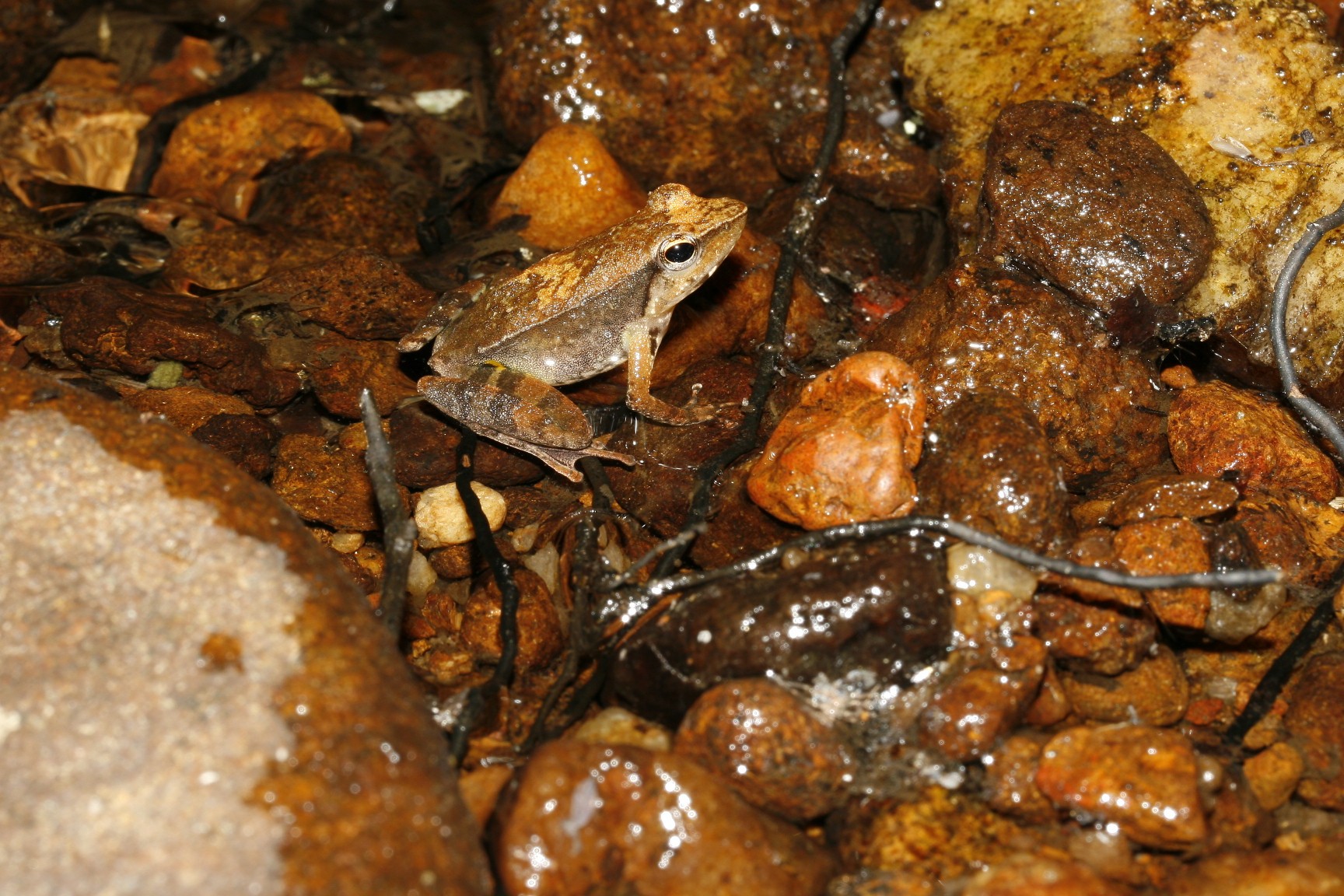
Micrixalus herrei from Agasthyamalai in the southern Western Ghats (Photo: SR Chandramouli)
The team found that frogs within a location were not more closely related to each other than expected, and that closely related frogs were similar in body size. This suggested that the size-assorted groups are likely a result of ecological processes such as competition, rather than local evolutionary diversification.
In addition, the researchers found that the species’ body size also dictated where it chose to inhabit. In Nyctibatrachus communities, larger species occupy rocks in the faster-flowing sections of streams, while the moderately sized ones occupy shallower parts of the stream, and small and tiny ones occupy leaf litter along the stream’s edge. In Hylarana, the larger species tend to be stream dwelling and the smaller ones prefer ponds, and each one breeds at different times of the year. These differences in habitat use may be to further reduce competition when using the same area.
“This has been a work in progress for nearly 20 years,” says Shanker. “Starting from our first observations, through the work of PhD students and postdocs, it has been a gradual process of discovery. We started with one genus and kept adding others as we found more interesting patterns.”
The findings add to a growing body of evidence that competition plays an important role in structuring animal communities, and highlight how the Western Ghats are a rich system for studying ecological and evolutionary processes. The region continues to face pressures from habitat loss and land use change, underscoring the importance of conserving its biodiversity.
REFERENCE:
Shanker K, Torsekar VR, Vijayakumar SP, Dinesh KP, Marathe A, Cyriac VP, Body size evolution and the co-occurrence of stream-dwelling frogs in the Western Ghats of India, Evolution (2026).
https://doi.org/10.1093/evolut/qpag060
LAB WEBSITE:
http://www.kartikshanker.in/



