Seasonal omnivore: a spiny tale of balancing nutrition
– Mihir Makarand Joshi
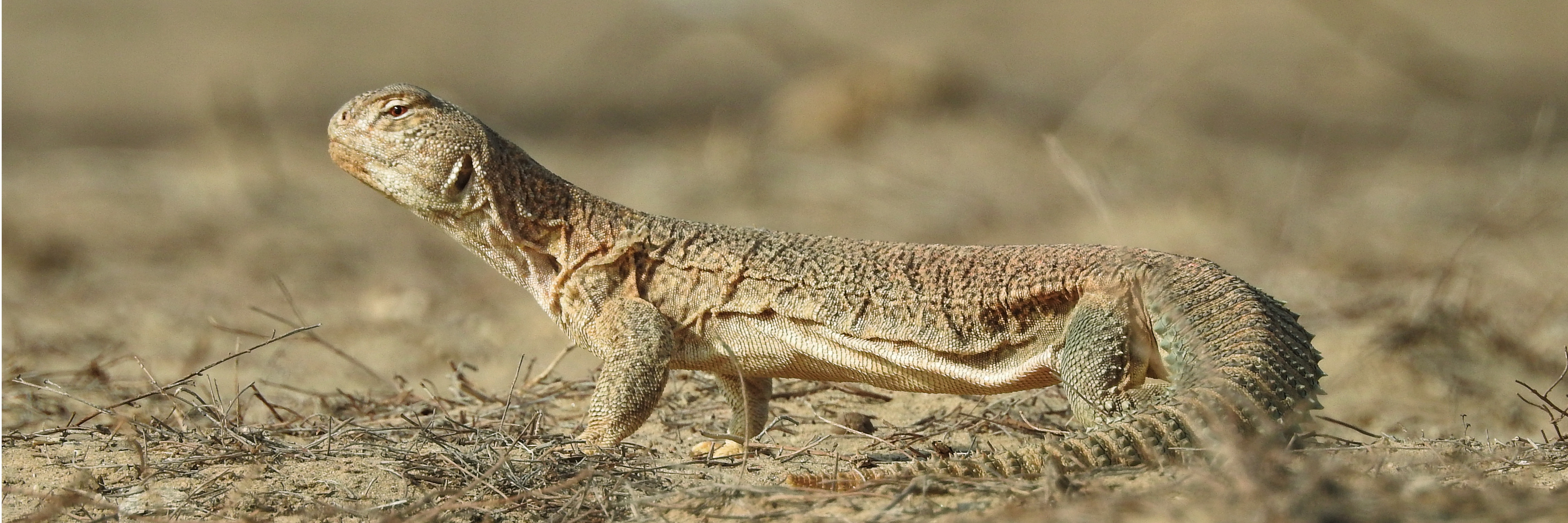
Animals, like elite athletes, must match their nutrition with biological demands to perform optimally. This means eating carbohydrate-rich foods for energy and protein-rich foods for growth and reproduction. Inability to do this often leads to reduced fitness for animals in the wild. Animals have been shown to modulate their nutritional intakes to meet biological demands in lab-based experiments and from environments with abundance of nutritional choices. Whether animals inhabiting extreme environments can adjust their nutritional intake and retention to match biological needs is rarely studied.
Researchers from IISc and collaborators studied how spiny-tailed lizards (Saara hardwickii) strike this balance in resource-poor desert environments. They combined field observation data and measurements of elemental composition (carbon and nitrogen) to examine the nutritional responses of these lizards.
By tracking the nutrient make-up of their food choices (indicating nutrient intake) and faecal matter (indicating nutrient retention) across seasons, they found that the animals consumed and retained more carbon before hibernation to survive the harsh winter, and more nitrogen during breeding season to invest in reproduction. Surprisingly, these herbivores included insects to their otherwise plant-based diet, only in the season they needed more protein.
The findings show how desert animals fine-tune both behavioural and physiological strategies to meet nutritional demands in extreme environments.
REFERENCE:
Joshi M, Tatu A, Hawlena D, Raubenheimer D, Thaker M, Desert lizards modulate nutritional responses to match seasonal biological needs, Royal Society Open Science (2026).
https://doi.org/10.1098/rsos.251690
LAB WEBSITE:
https://mariathaker.weebly.com/



